

This is an excerpt from my latest Washington Post Intelligence report. Free link to the full report at the bottom.
Intro: The U.S.-China economic détente hangs by a thread
President Donald Trump’s May visit to Beijing was most notable for the fact that not much new was accomplished. Trump and Chinese President Xi Jinping did not settle ongoing disputes about trade, tariffs, technology or Taiwan. No major economic agreements or significant business deals were struck. But the two sides agreed to continue their trade war pause until Xi’s expected visit to the United States in September.
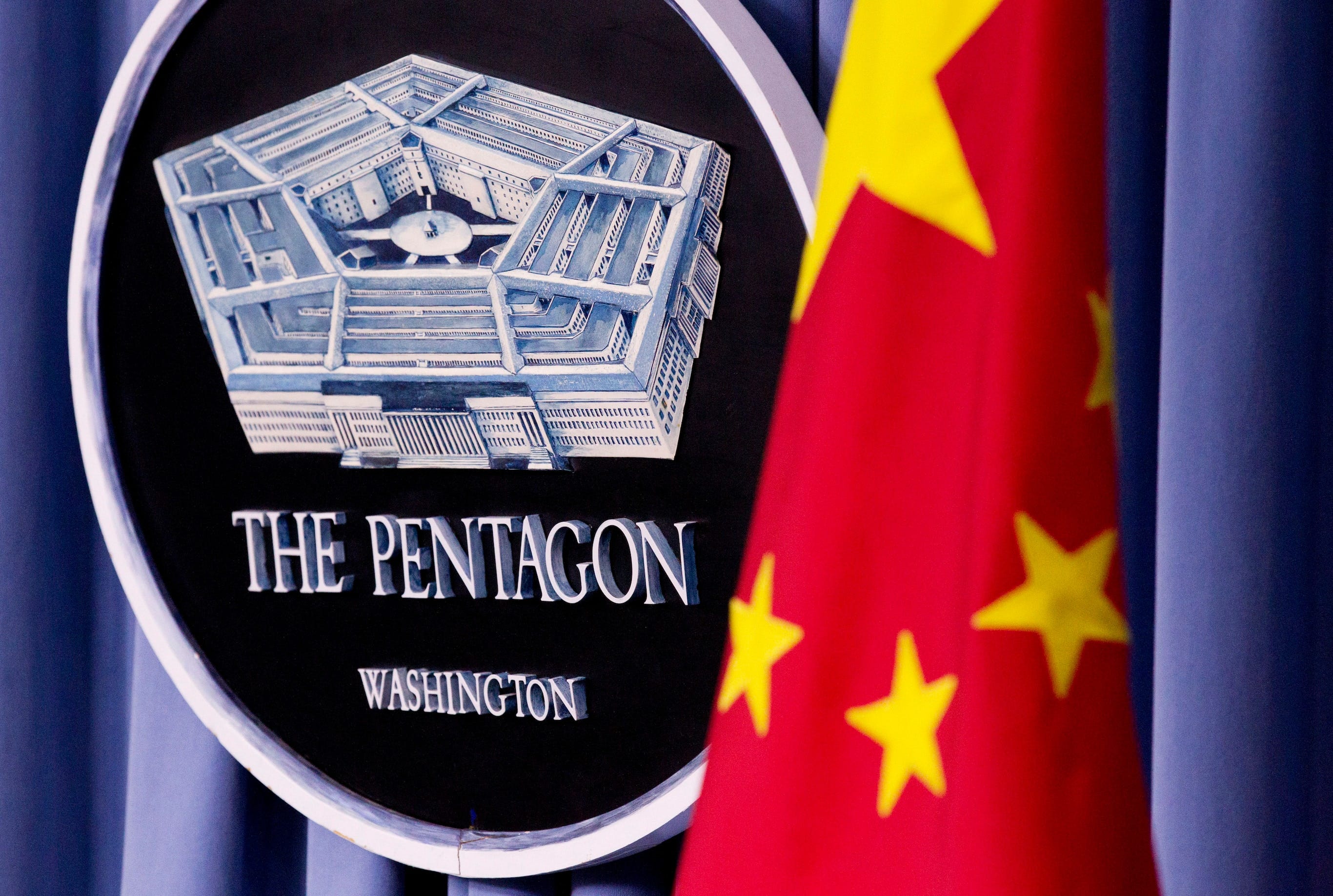
That lull now appears to be over. Washington fired the first salvo on June 8, when the Pentagon rereleased its updated list of Chinese companies it claims are tied to the People’s Liberation Army. This is known as the 1260H list, named after the provision in the 2021 National Defense Authorization Act that established it. This year’s list included 65 new entities and delisted 10, bringing the total to a record-high 188 companies designated.
The new additions in the June 8 list expanded into new sectors of the Chinese economy: consumer electric vehicles and batteries (BYD, NIO, EVE Energy), consumer tech (Alibaba, Baidu), humanoid robotics (Unitree), LiDAR (Hesai, RoboSense), biotech (WuXi AppTec, BGI Group), solar (JA Solar, Trina Solar), and consumer networking hardware (TP-Link). The Pentagon is designating any company that participates in China’s “civil-military fusion ecosystem” — a definition broad enough to encompass most of China’s private sector.
On Sunday, Beijing responded. China’s Ministry of Commerce placed 10 U.S. companies on its export control list, barring Chinese firms from supplying them with dual-use goods — and the Finance Ministry separately excluded 46 mostly defense-linked U.S. companies from Chinese government procurement. The export control list is where Beijing aimed for strategic effect: among those named are MP Materials Corp. and USA Rare Earth, the two companies at the center of Washington’s push to build a domestic rare earth supply chain independent of China.
Some experts point out that a 1260H designation is not a sanctions measure. The newly listed companies remain free to sell in the United States and raise capital on U.S. exchanges — for now. “It’s the list of Chinese companies out there that matters the least,” Martin Chorzempa, senior fellow at the Peterson Institute for International Economics, told WP Intelligence.
But the list’s bite comes from its downstream effects. Starting June 30, DoD cannot contract directly with listed entities. A lobbying ban takes effect simultaneously: DoD cannot contract with any U.S. firm that employs a lobbyist representing a listed Chinese entity. Starting June 2027, it also cannot contract with any company whose goods or services for a contract include those from a listed company. The COINS Act in the 2026 National Defense Authorization Act requires, within two years, a presidential review of whether 1260H-listed companies qualify for Treasury’s “Non-SDN Chinese Military-Industrial Complex” (NS-CMIC) List, which would bar U.S. persons from trading their securities.
As Neena Shenai of the law firm WilmerHale told WP Intelligence, the 1260H list is “the U.S. government raising a red flag about certain companies and their relationship to the Chinese military industrial complex.”
In February, the Pentagon published a near-identical version of the list but retracted it within the hour — with no public explanation. The retraction occurred because the Pentagon had dropped two Chinese memory chip manufacturers — YMTC and CXMT — that the Biden administration had already designated, according to officials close to the process who were not authorized to speak publicly about internal deliberations. China hawks inside and outside the administration criticized the omission, but the list stayed in limbo until after the Trump-Xi summit, which the White House did not want to disrupt, these officials said. Now, those two Chinese firms are on the list again.
“You can’t have a functional data center without these memory chips. The Chinese competitors to U.S. and allied firms are CXMT and YMTC,” said Michael Sobolik, senior fellow at the Hudson Institute. “So, the conditions are in place where if CXMT and YMTC are not blacklisted, we could miss the opportunity.”
The Defense Department, which did not respond to requests for comment, has not said whether it will respond to Beijing’s retaliation against U.S. firms. But the administration’s next move could come from a different agency. On Wednesday, Reuters reported that the Commerce Department’s Bureau of Industry and Security has not updated its list of blacklisted Chinese entities since October — the longest gap in more than a decade. The interagency committee that governs the list has approved more than 100 Chinese companies for designation that Commerce has not published. Among them: DeepSeek, CXMT and many more. Reuters reported citing sources that Undersecretary of Commerce Jeffrey Kessler has, since late 2025, sought to avoid listing Chinese parties to prevent escalating bilateral tensions. The Commerce Department did not respond to a request for comment.
U.S. businesses depend on critical minerals from China to such an extent that escalation could have cascading effects on U.S. defense and manufacturing sectors, which are already short on supplies. That will be top of mind in the White House as it considers next moves, Chorzempa told WP Intelligence.
“China clearly believes it has escalation dominance,” Chozempra said. “The sense that you could just do things like this and China would just take it — that ship has sailed.”
A White House spokesperson told us that the Defense Department’s 1260H procurement restrictions “help ensure secure and reliable supply chains for U.S. military forces,” and added, “Beijing’s response only validates the assessment that Chinese suppliers are unreliable.”
Read the entire report using this gift link here: https://wapo.st/4eWLpSx
China's dominance was pefectly okay when the billionaire class sold out our industrial base for money, and wounded a thriving American middle class in the process. Now China is scapegoated for the very actions that fueled our economic inequality. Can't have it both ways, America, for shooting yourself in the foot and blaming the gun manufacturer.
That's very presumptive, Josh. It presumes China is our 'adversary,' when no such threat has been presented. It further presumes the Chinese dictatorship 'means us harm,' again without evidence. We are China's major market. I see them quietly standing by as we continue to shoot ourselves in the foot. They use investment to further their interests and we use wars, both of the military and tariffs kind.
I understand your position, but who is intimidating whom?