

This is an excerpt from my latest Washington Post Intelligence report. Free link to the full report at the bottom.
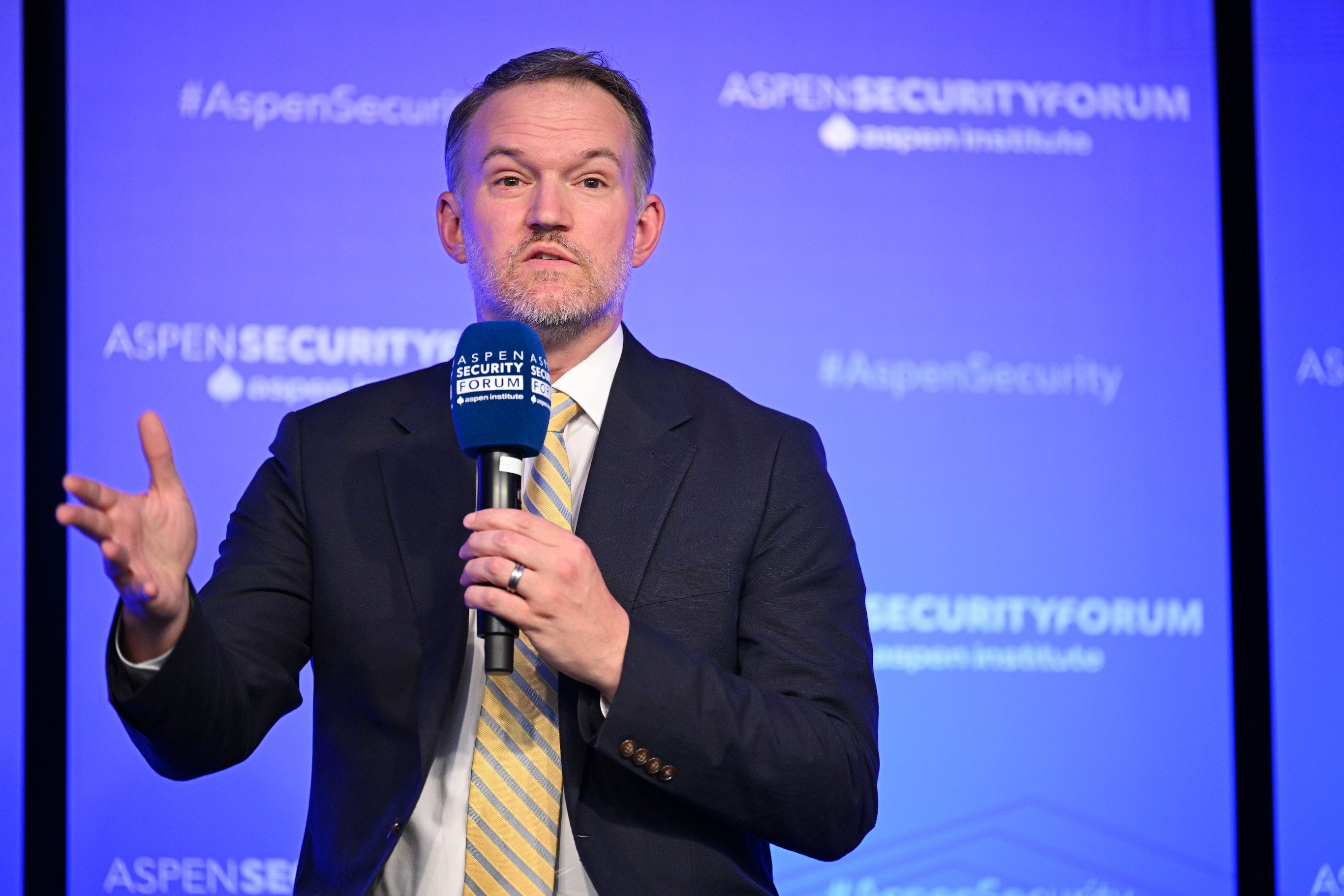
For the better part of two decades, the Aspen Security Forum has offered a semiprivate venue where top officials, flag officers, foreign diplomats, chief executives, subject-matter experts and journalists network and trade notes on the state of the world. This year was no different, with one glaring exception: Few Trump administration officials came.
That absence is now a pattern. Last year, Secretary of Defense Pete Hegseth pulled all uniformed officers and senior Pentagon civilians days before the forum opened, with a spokesperson declaring that “senior representatives of the Department of Defense will no longer be participating in an event that promotes the evil of globalism, disdain for our great country, and hatred for the president of the United States.” This year, the Pentagon stayed away again. U.S. Trade Representative Jamieson Greer was the only senior administration official to speak at the event.
The forum convened against a turbulent backdrop. Trump’s global tariff campaign has entered a volatile new phase, with the emergency powers behind his signature tariffs struck down by the Supreme Court and a stopgap authority set to expire within days. Resumption of hostilities with Iran has pushed energy prices higher.
In the competition over artificial intelligence, Chinese developers have narrowed the gap with the top American labs, with Moonshot AI’s newly released Kimi K3 model nearly rivaling some of the best systems the leading U.S. firms have to offer. And the Pentagon is pressing to expand its budget and overhaul how it buys weapons — while battling Iran and its own bureaucracy at the same time.
Former ambassador to China Nicholas Burns, co-chair of the Aspen Security Group, framed the stakes in the sweep of decades. “We’re in a structural competition — military, tech, economic [and a] battle of ideas — that will go into the ’20s, ’30s and ’40s,” he said.
On the main stage, news about China, Iran and Ukraine was top of mind. But, in the hallways and in the restaurants downtown, much of the conversation turned to a deeper question: how the United States can map out a long-term strategy that allies, and the industries that work with or depend on the U.S. government, can understand and act on. In discussions about artificial intelligence, critical minerals, drones and space, the consistent refrain was that Washington must move faster by fixing how the Pentagon buys things, whom it buys them from, and, above all, how quickly those things can be built and put on the battlefield.
“One of the biggest challenges we face right now is the pace of change,” said former commerce secretary Penny Pritzker. “It is so fast, whether it’s at war, whether it’s in technology per se, whether it’s in your business or whether it’s how you run your daily life.”
The administration’s inconsistent trade policy, its unclear endgame in Iran, its uneven treatment of allies in Europe and Asia, and its generally chaotic operating style are making planning beyond tomorrow even more risky, many participants said. Even supporters of the administration’s overall drive to rectify imbalances in the international order admitted there’s no way to predict how it will end up.
“We can’t continue to subsidize global security while others promote their own domestic welfare and expect this to go on and on and on,” said former defense secretary Mark T. Esper. But, when asked where it was all headed, he said, “We don’t know. This is going to take time to play out [for] what the new normal looks like.”
For businesses trying to navigate this new global disorder, that means added risk. Michael Froman, the former U.S. trade representative who now leads the Council on Foreign Relations, put it bluntly: “The only thing certain is that there may be a new decision on trade and on tariffs, and companies are just going to have to adjust to that,” he said.
That was the mood in Aspen: The old order is gone; the new one has not arrived. And the interval between them is where governments and industry now must operate.
Read the entire report here: https://wapo.st/3RpwZBI