


This is an excerpt from my latest Washington Post Intelligence report. Free link to the full report at the bottom.
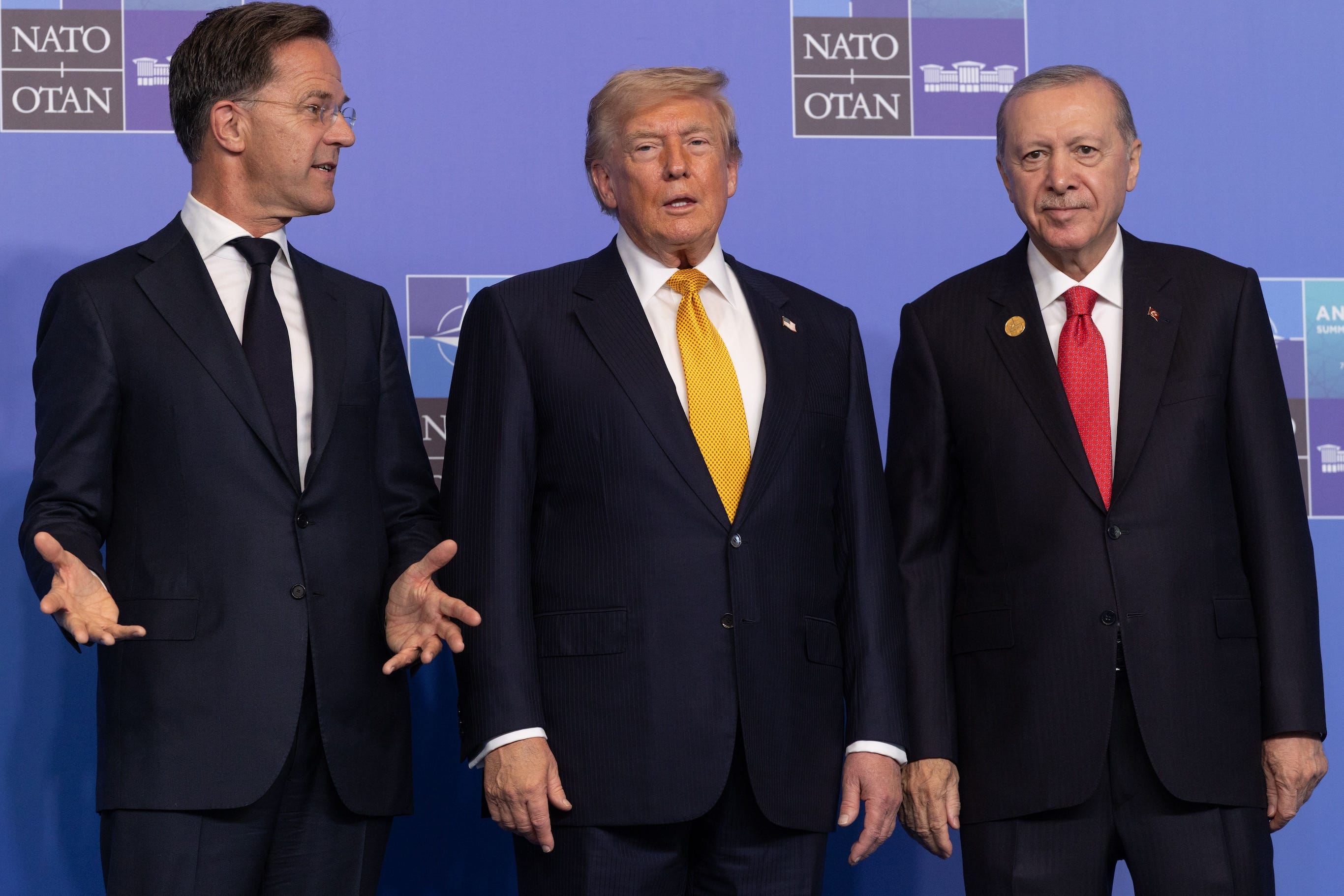
President Donald Trump’s trip to Ankara, Turkey, last week included his usual mantra for the NATO partners assembled there: that Europe must carry more weight and spend more money to support NATO and defend its own continent. European leaders at the summit went out of their way to agree with him. Their message was consistent: Europe must do more, both because Washington demands it and because Washington can no longer be counted on.
“We will make NATO more European so that it can remain transatlantic,” German Chancellor Friedrich Merz said. NATO Secretary General Mark Rutte directly tied increased European defense spending to the Trump administration’s concept of “NATO 3.0,” a term describing the next iteration of the alliance. “We are rebalancing our security for the better, and that is what NATO 3.0 is all about,” he said.
Canadian Prime Minister Mark Carney was blunt when talking to reporters in Ankara about the concerns underpinning allied action: “It’s not just that [Trump’s] winning the argument — he’s won the argument,” Carney said. “Countries realize they need to take more responsibility. They see the direct threats.”
At his pre-summit press conference in Ankara, Rutte said European allies and Canada spent nearly 20 percent more on core defense last year than the year before — and he estimated that, in 2025 and 2026 combined, those countries have added $258 billion in extra investment. Rutte credited Trump with a cumulative $1.2 trillion increase in European and Canadian defense spending since 2017, which he called the “Trump Trillion” while sitting beside him in Ankara.
That number is symbolic, but the commitments made at the summit are real.
Allies announced more than $50 billion in new procurements at the summit’s Defense Industry Forum, covering deep precision strike, air and missile defense, uncrewed systems and intelligence, plus 27 billion euros to modernize alliance fuel infrastructure. Twelve European nations, led by Britain, signed on to a separate $50 billion deep-strike coalition. Turkey signed industrial agreements across five capability areas. And allies pledged 70 billion euros in military support for Ukraine this year, with a promise to match it in 2027.
“European Allies and Canada, working with the United States, are assuming greater responsibility for the Alliance’s defense,” stated the unusually brief official summit declaration.
Trump’s repeated criticism of NATO, and his constant threats not to come to NATO allies in need, also have a negative impact, Rep. Derek Tran (D-California), co-chair of the House Democratic Caucus National Security Task Force, told Washington Post Intelligence. “President Trump’s presence at this NATO summit was a rollercoaster,” and the administration’s record “has left our allies wondering if they can still count on the United States as a partner and as the leader of the free world,” he said.
“President Trump has effectively restored America’s standing on the world stage, and he has done more for NATO than anyone else – the United States’ contributions to NATO dwarf those of any of our allies,” said White House spokeswoman Anna Kelly. “This year’s NATO summit was a success – and as always, he returned to the United States with major deliverables for our country in the form of billions of dollars in investments for American defense companies.”
But one U.S. ally, Ukraine, came away from the NATO summit with more Trump support, both rhetorically and militarily. Sitting with Ukraine President Volodymyr Zelensky, Trump said the United States would license Ukraine to build Patriot interceptors and send American companies to help. “We haven’t informed the company of that yet, but that’ll work out all right,” Trump said. He also promised increased cooperation between the U.S. and Ukrainian defense industries on drones. “Well, we would buy their drones,” he said, “but they have an ability to make a lot of them.”
Bridget Brink, who served as U.S. ambassador in Kyiv under Presidents Joe Biden and Trump before resigning in April 2025, said the announcements were positive but won’t bear fruit on any timeline that Ukraine can count on. “It’s a way for Trump to show that we’re doing something, but it’s just not fast enough. It’s going to take years for Patriot production to happen,” Brink said in an interview. “We have done this in Japan and in Germany, and it took years in each of those places to get up and running …. And that was in a peacetime situation.”
Read the entire report at this free link here: https://wapo.st/3R9y94c